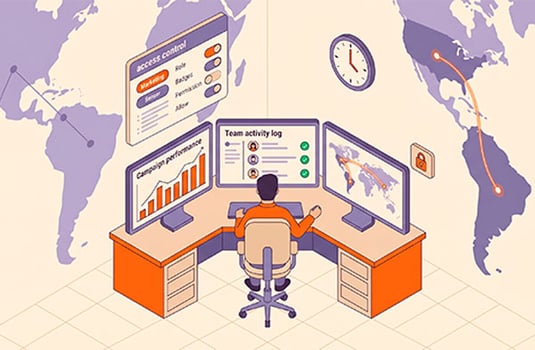
No. Offshoring your marketing does not mean losing control over strategy or direction. The companies that lose control offshore do so because of structural failures — no named team, no onboarding, no shared tools — not because of geography. When your partner assigns named team members, operates inside your existing platforms, and follows your strategy documents, you retain full oversight of quality, direction, and results.
Your marketing strategy took months to build. The ICP is defined, the channels are mapped, and the messaging framework is documented. When someone on your leadership team suggests going offshore, the first concern that surfaces isn't cost or talent. It's direction: who makes sure the work stays aligned with what you've built?
This is the most common objection US marketing leaders raise before working with an offshore digital marketing team. Offshoring marketing control is not lost by default — but the structure you put in place before day one is what makes that true.
Where control problems actually come from
Companies that lose strategic direction after going offshore almost always share the same root problem: they handed over execution without onboarding the offshore team into how they work. No named contacts, no shared tools, no documented strategy. The team receives a brief and operates in isolation.
That is a structural failure, not a geography problem. A LATAM offshore team runs on US business hours, inside your existing platforms, and inside the strategy documents your team owns. The variable is whether your partner is built to work that way.
What maintaining control looks like in practice
The model that works is straightforward: strategy stays on your side, execution goes offshore. Your offshore team carries out your marketing direction inside the tools and reporting cadence you define from the start.
In a well-structured setup, your team owns the brief, the goals, and the review cycle. Your offshore partner handles execution inside Google Ads, HubSpot, GA4, or whichever platforms your stack requires. Reporting happens in the format and frequency you set. An offshore marketing team integrated into your workflow operates as an extension of your internal team, not a vendor you check in on once a month.
Four questions that reveal whether a partner will keep you in control
Before granting access to any offshore partner, ask these five questions directly:
-
Do they onboard into your existing tools, or ask you to adapt to theirs?
-
Do they follow your strategy documents from day one, or build their own from scratch?
-
What is their team retention rate?
-
What is the escalation path when performance drops?
A partner that answers all four clearly gives you the oversight structure you need. One that hedges is asking you to trust a process they have not built. See how Julius structures offshore digital marketing for US companies to understand what a structured setup looks like in practice.
What about data security and platform access?
Access control is a specific concern that comes alongside the broader offshoring marketing control question. Offshore teams should operate with role-based access inside your platforms: no shared passwords, no admin-level access where it is not required, and a clear offboarding process when team members change.
Your offshore team works inside your tool stack under your access policies. You define who sees what, and your IT or ops lead owns that configuration. A partner that asks you to trust a shared login or broad account access is the wrong partner. The right one follows your access boundaries from day one, not after a security incident prompts a review.
Losing control is a real risk when the model is wrong. When the model is right, the concern becomes a question of partner selection, not geography.
Frequently Asked Questions
Will I lose strategic control if I offshore my marketing?
No. Losing control is a structural risk, not a geographic one. When your partner assigns named team members, onboards into your existing tools, and follows your strategy documents, you retain full oversight. The companies that lose control offshore skipped the setup — no onboarding, no named contacts, no shared workflow.
How do offshore marketing teams handle data security and platform access?
Offshore teams should operate with role-based access inside your existing platforms, not shared credentials or broad admin access. Your IT or ops lead owns the access configuration. A well-run offshore partner follows your access policies from day one and has a clear offboarding process when team members change.
What does a structured offshore marketing engagement look like?
Strategy stays with your team. Execution — paid media, SEO, email, reporting — is handled offshore inside your tools at the cadence you define. Your offshore partner operates as a named team extension, not a pool of resources you brief once a month.
How do I know if my offshore partner is doing the work themselves?
Ask for named team members before you sign. A partner that assigns specific people to your account and shows you their profiles, certifications, and backgrounds is accountable. A partner that talks about a talent pool or rotating resources is not.
What should I put in place before offshoring my marketing?
Three things before day one: a documented strategy brief the offshore team can follow, defined access policies for every platform they will touch, and a reporting cadence you set. The more context you hand over at the start, the less oversight you need later.